Freemasonry
Symbols, Ritual and the Path to Self-Perfection
The Freemason Lodges
are the descendants of the cathedral building lodges of the Middle Ages. Unlike their ancestors, stones are not carried to a church building, but inserted into the ideal temple of humanity. Both the local association and the meeting place are referred to as Bauhütte; Lodge – from the English word – is synonymous.
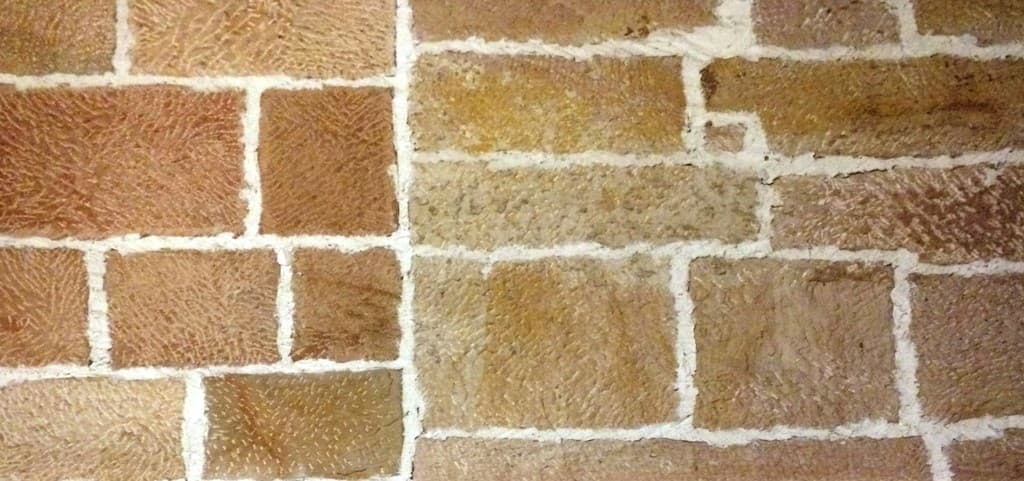
The rough stone that each of us hews throughout life is our own personality with its rough edges, which must be smoothed so that we can harmoniously integrate our stone into creation and, to the extent that this succeeds, contribute to a more humane world. This does not mean, however, that all stones are shaped the same way. Each one must be hewn according to its own nature.
Freemason Lodges are communities of unequals.
The Temple
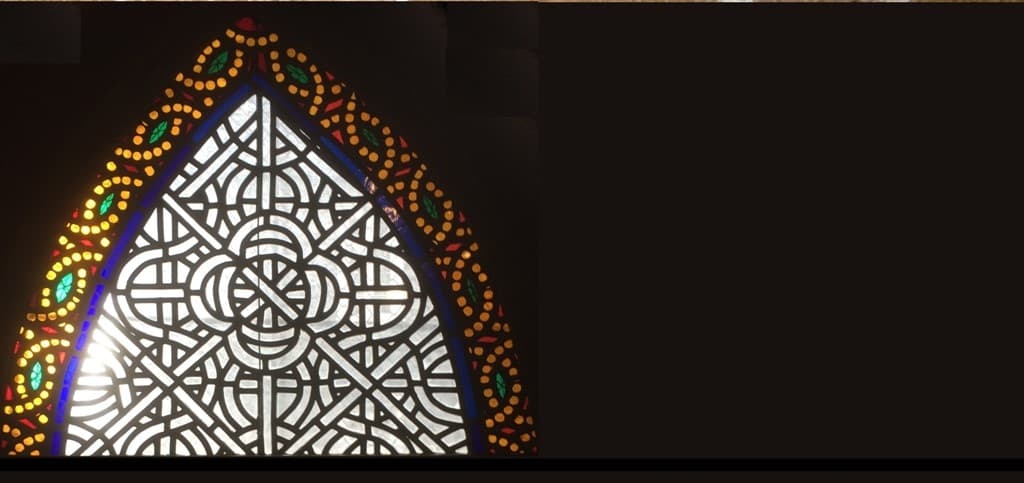
is the place where we work symbolically. It is not a specific, specially consecrated space, but arises wherever we gather for work and celebrate our masonic ritual. In the ritual we encounter symbols in many forms. They appear in the depictions on our tracing board, but also in physical objects, in actions and exchanges. They are always meant to help us find answers to our “final” questions:
- ◆Where do I come from?
- ◆What task do I have in this world?
- ◆Where am I going?
A special symbol is the “Almighty Architect of all Worlds”. Every Brother is called upon to place his specific concept of God, whatever form it may take, in the position of this placeholder.
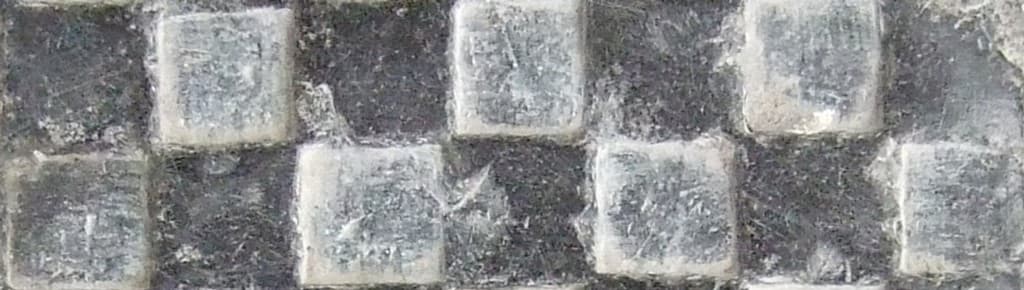
The Mosaic Pavement
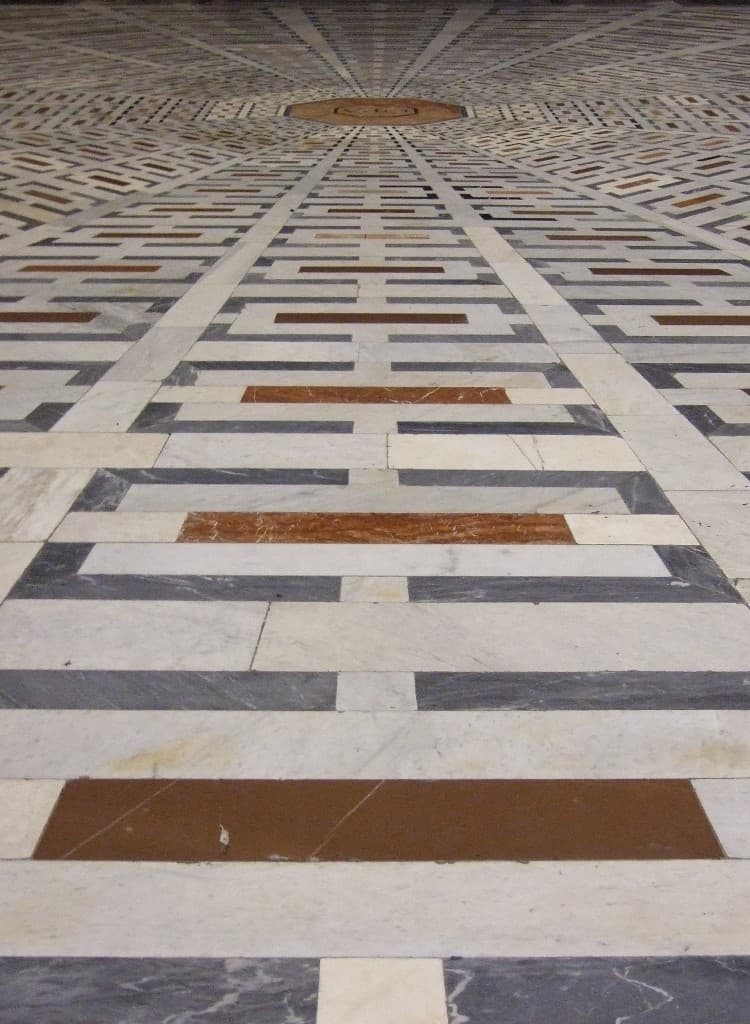
On our tracing board lies the mosaic pavement of black and white squares. In masonic symbolism, its alternating white and black fields point to the constant alternation of light and shadow, joy and sorrow, coming and going that marks our lives. The regularity of the arrangement shows that this alternation is not the play of blind chance, but the working of eternal laws that seek to guide us along the paths of development towards perfection. The relationship between light and darkness occupies the mason in a special way. Freemasonry is an initiatory order. It regards initiation as the giving of light.
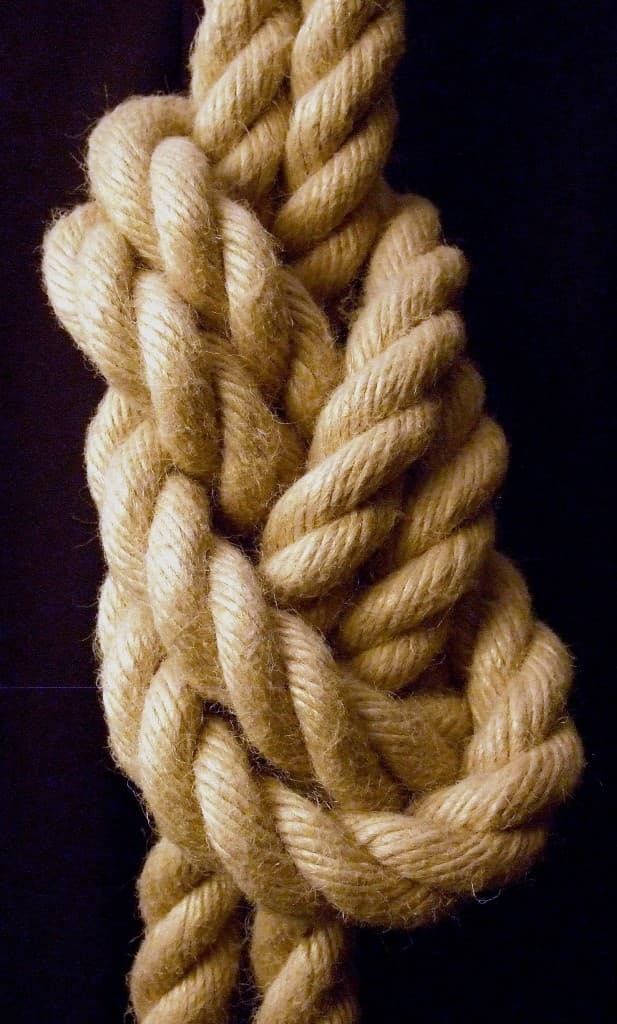
The Cable Tow
On our tracing board we also see the Cable Tow, which reaches down from above, from the realm of transcendence, to the mosaic pavement in our dialectical material world. Figure-eight knots are tied into the rope. This firm yet easily loosened knot was for the ancient builders more than just a tool for fastening and lifting building materials. For them, the rope that descended from the heights of the cathedral, as if from heaven, was an image of the connection between people bound by the limitations of the world and the Eternal. The knot as a means of transport upward and downward stood for the possibility of exchange — the precondition for people to recognise their calling and align their lives and actions with eternal values. Beyond this, the builders secured one another in dangerous situations with rope and figure-eight knots. They therefore also symbolised mutual aid and, as a visible bond between the builders, the brotherly fellowship within their community. Today we no longer secure one another with ropes — but the symbolic meaning of the figure-eight knot lives on within us.
The Masonic Ritual
There is no single masonic ritual. Over the centuries, numerous rituals have emerged, adapted to the spirit of the times and sometimes discarded again or no longer celebrated for other reasons. Today, too, numerous Grand Lodges coexist, each with their own ritual variants. In their core content, however, they largely agree.
The Goal
is essentially the same in all serious traditions. Lama Ngawang Kalzang (1866–1936) of the Gelug school of Tibetan Buddhism, also known as Tomo Geshe Rinpoche, expressed it thus:
“The greater our own imperfection, the more we are inclined to see the faults of others, while those who have gained deeper insight can see through these faults into the true nature of other beings. The greatest people were therefore those who recognised the divine qualities in their fellow human beings and were always ready to show respect even to the most insignificant among them. As long as we fancy ourselves superior to others and look down upon the world, we can make no real progress. But as soon as we come to the realisation that we live in exactly the world we deserve, we will feel the faults of others as our own – even if they appear in a different form than our own. It is our own doing that we live in this imperfect world, for it is in the ultimate sense our own creation. Only such an attitude can help us overcome our difficulties, for it replaces fruitless negation with the positive impulse towards perfection, which makes us not only worthy of a better world, but co-creators and participants in its creation.”
Freemasonry does not require belief in karmic manifestations, but for it too the following holds:
The surest way to change the world is to change oneself.